


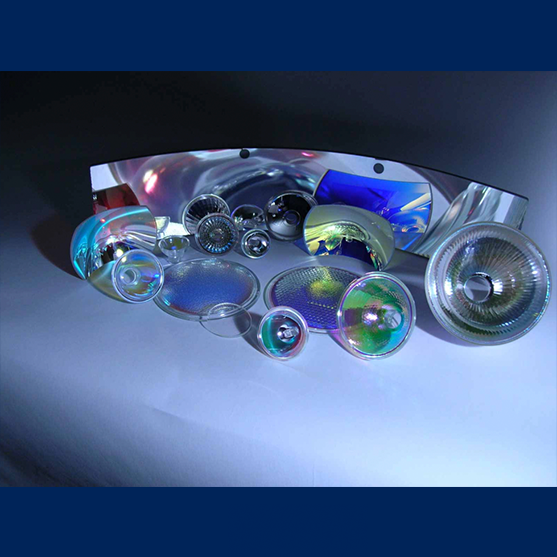

Longpass Dichroic Filters
Longpass dichroics transmit wavelengths above a certain wavelength. This wavelength is called a cut-on wavelength for longpass filters. LP dichroics can be used instead of bandpass filters in fluorescence applications to maximize signal when using a single fluorescent label, or to block the laser in Raman applications.

Shortpass Dichroics
Shortpass dichroic filters transmit wavelengths below a certain wavelength. This wavelength is called a cutoff wavelength for shortpass filters. SP dichroics are often used in digital cameras to block undesired near-infrared (NIR) signals from reaching the camera.
Multi-band Combinations
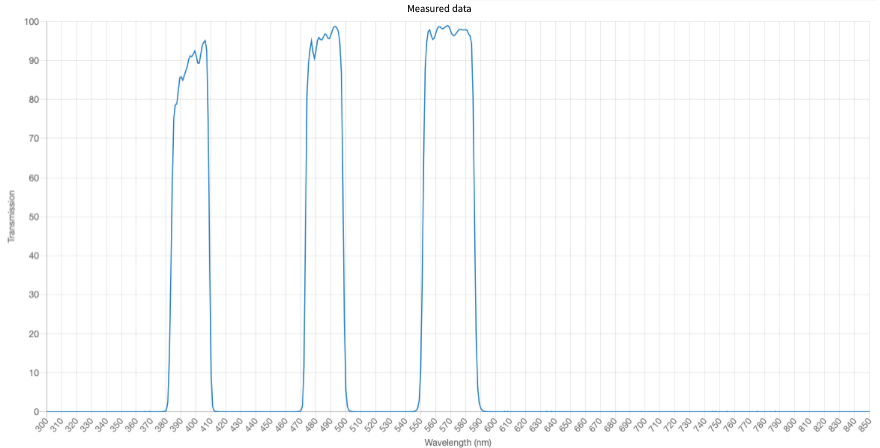
Multi-band filters and dichroics are used when an optical system design cannot support multiple filters. These multi-band filters can be configured as bandpass or notch (band-reject) for desired ranges, and in dual, triple, quad, penta or even octo-band.
UV Dichroic Filters
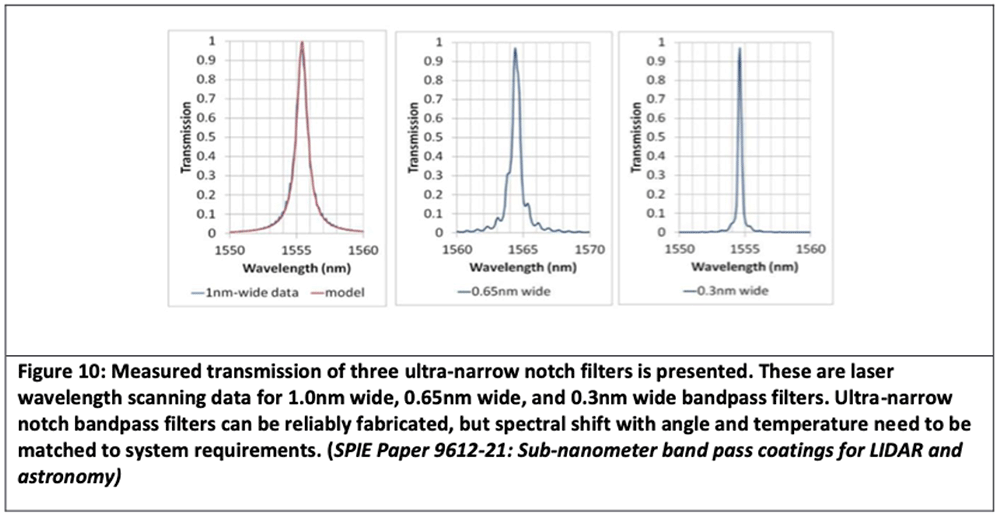
Omega routinely produces dichroics which selectively transmit or reject wavelength bands of less than 1nm and even less than 0.1nm

Bandpass Dichroics
Bandpass filters or bandpass dichroics are designed to have high transmission over a certain wavelength range while blocking light from other wavelengths to provide good signal-to-noise in the transmitting region.
Dichroics on Fiber Tips
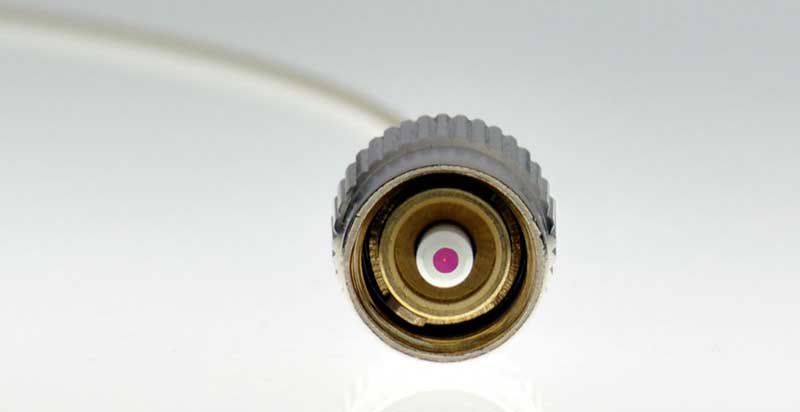
In applications which demand spectral selectivity on the entrance or exit of a fiber, Omega has a solution to deposit one or more filter recipes to a fiber (or fiber bundle).

Linear Variable Dichroic Filters
Linear variable dichroic filters are bandpass filters that change center wavelength across one dimension of the part. They can be used as simple spectrometers or in order-sorting applications. These elements are very useful in Hyperspectral Imaging.

Plate Beamsplitters
Patterned filters are useful in applications where lateral space constraints require discrete wavelength selection. This is often the case with Earth Observation filters.